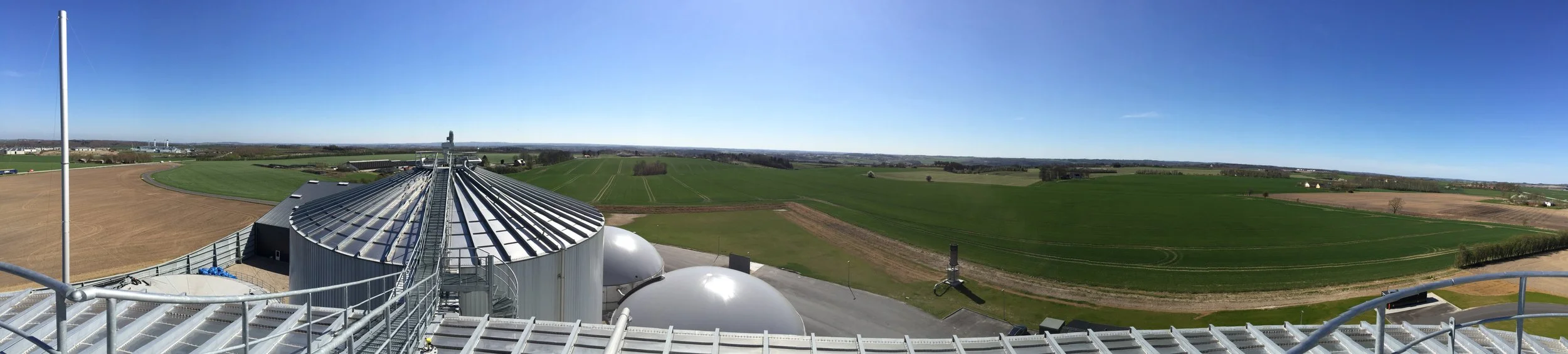
Two Valuable Products from One Biogas Process
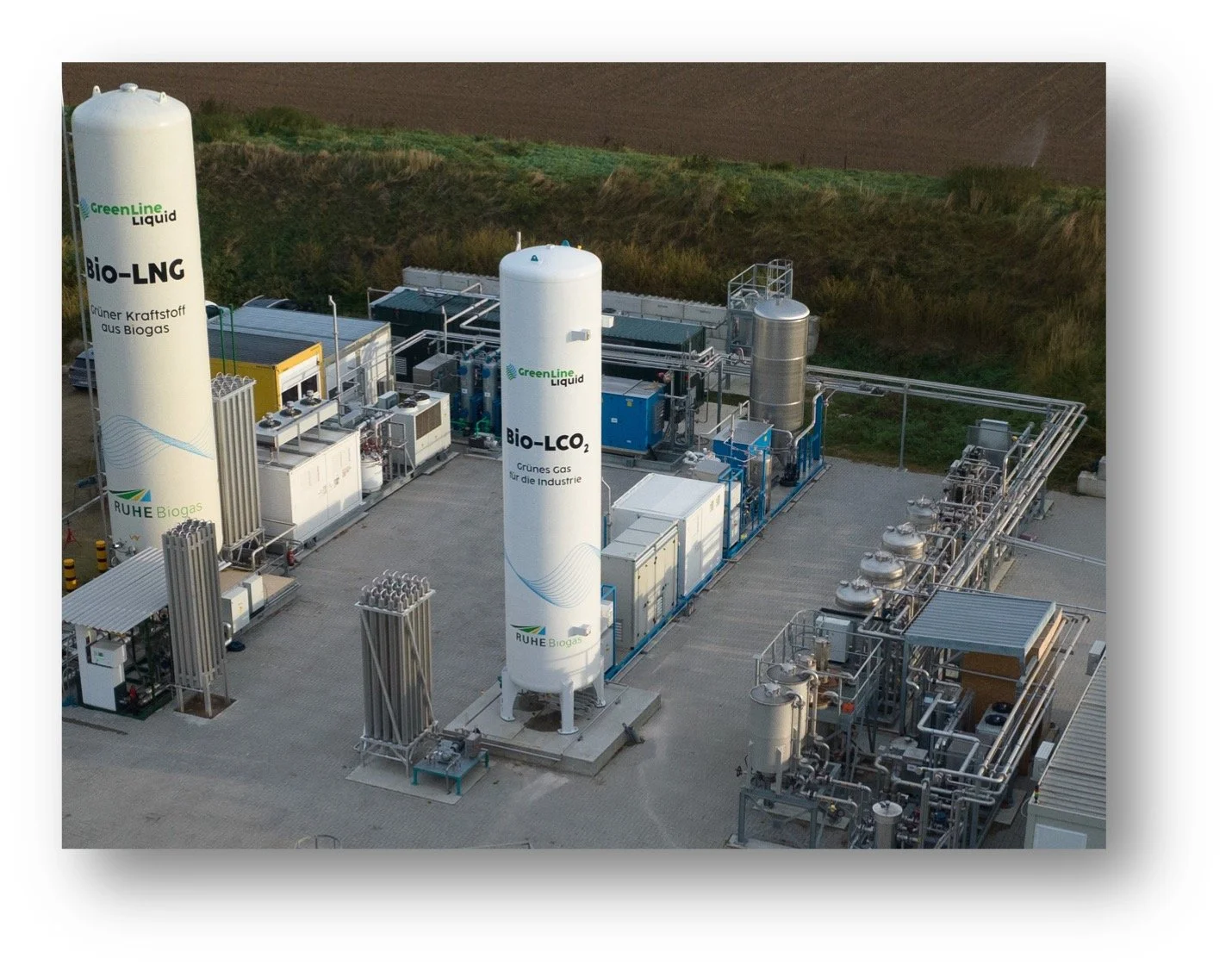
Convert upgraded biomethane into LBG for storage and transport—and recover the separated biogenic CO₂ as a liquid product. MachOne's modular liquefaction systems give biogas producers a route to market beyond the gas grid while creating potential value from both major gas streams.
Green Gas Solutions supports MachOne projects across the Nordic market. We help define the process basis, review feed-gas data, coordinate the interfaces with upgrading, storage and offloading, and develop the right technical and commercial scope with the technology supplier.

Make More of Every Cubic Metre of Biogas
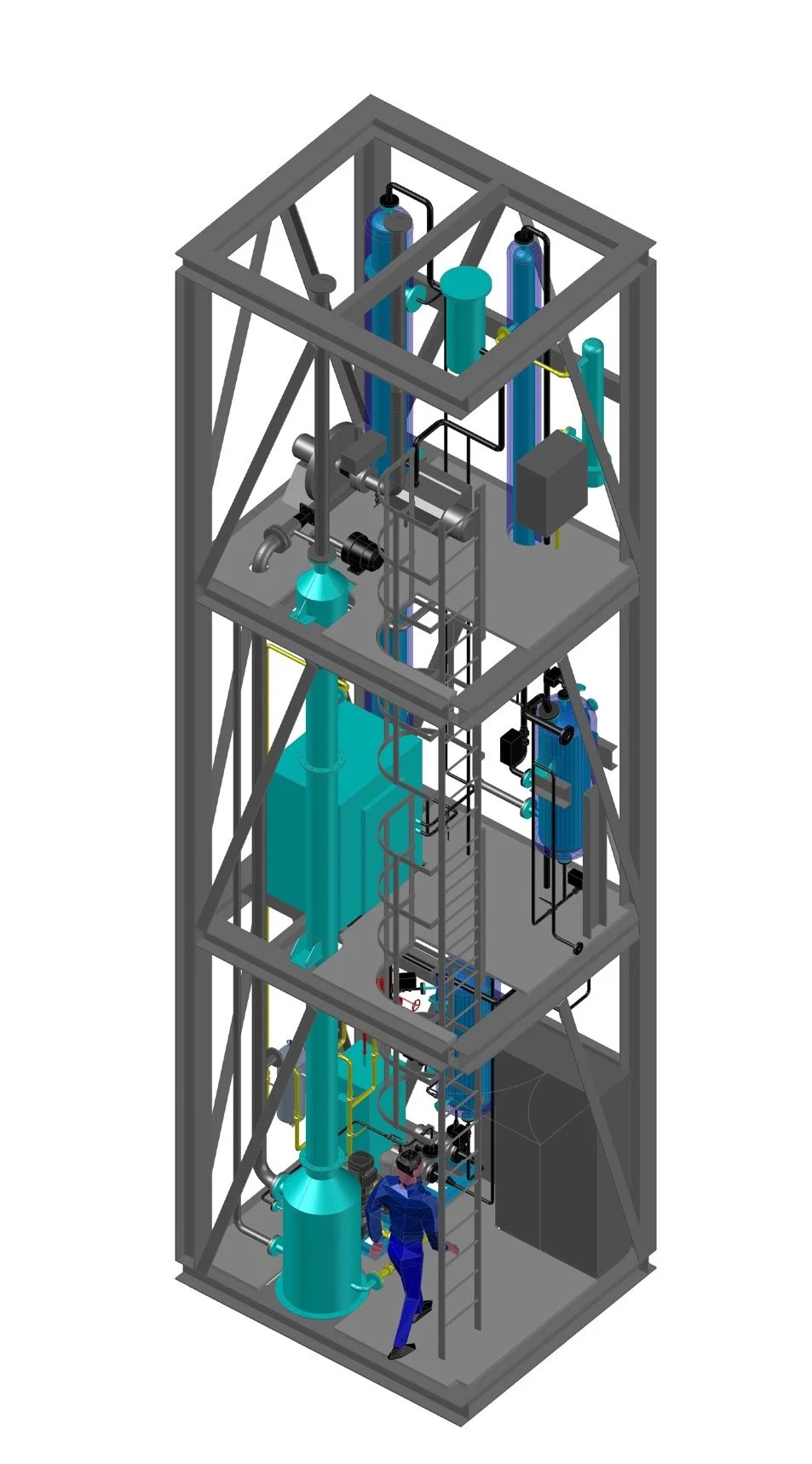
After biogas upgrading, the methane-rich stream and the separated CO₂-rich stream can follow two different liquefaction routes:
LBG — Liquefied Biomethane
Upgraded biomethane is polished to remove residual CO₂ and water, cooled to cryogenic temperature and liquefied. The resulting LBG—also known as Bio-LNG—can be stored and transported by tanker for use in heavy transport, marine fuel, industry or other off-grid applications.
Liquid Biogenic CO₂
The CO₂-rich stream from the upgrading plant is cleaned, dried, purified and liquefied. Depending on the feed composition, selected process and required quality specification, the liquid CO₂ can be prepared for industrial applications or for a high-purity route with the analysis and quality assurance required by the intended market.
The two systems can be supplied separately or developed as one coordinated project. The optimum scope depends on the available gas streams, required product grades, local demand, logistics, utilities and the existing upgrading technology.
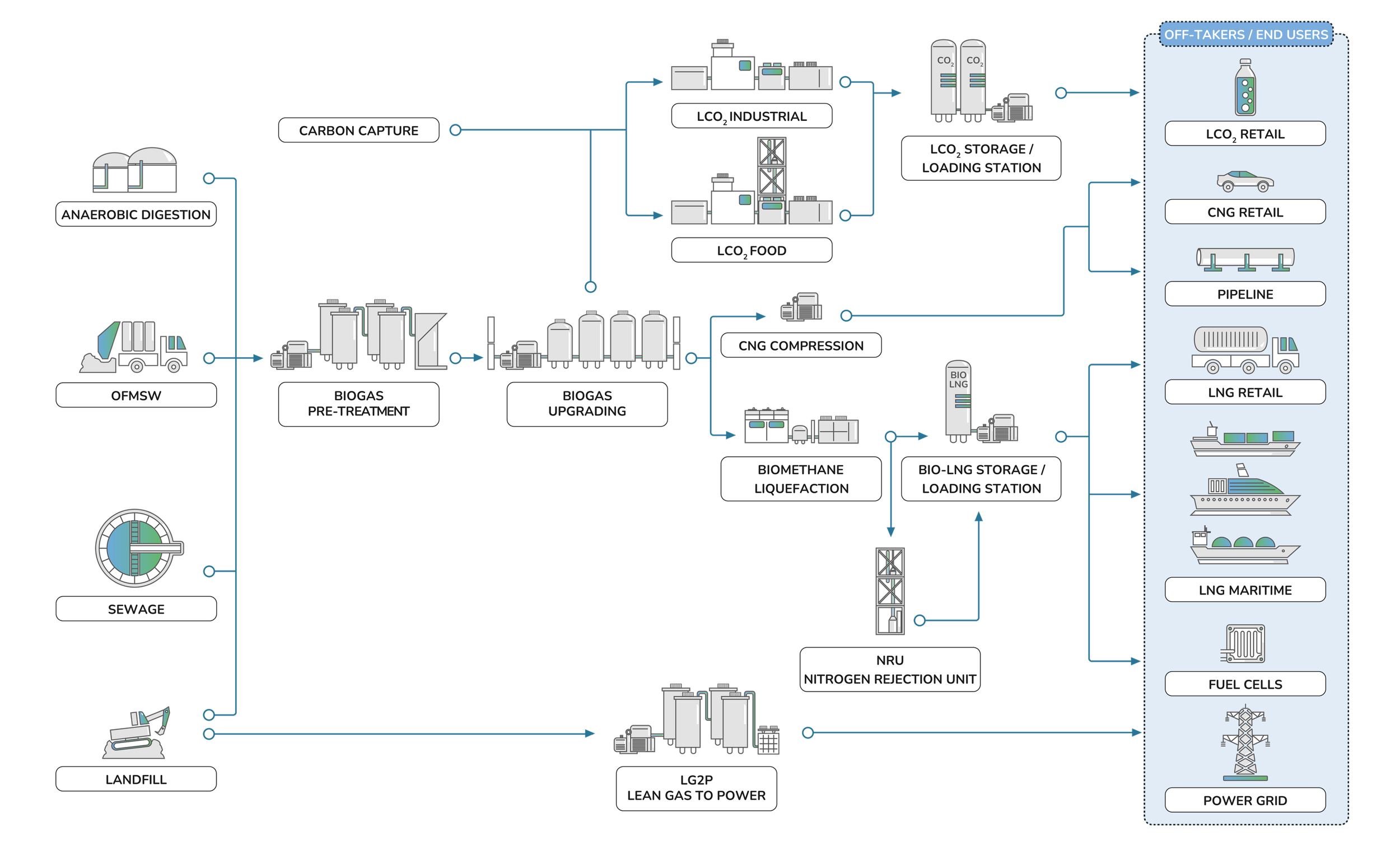
LBG Production with MachOne Cryochiller
MachOne's Cryochiller uses a reverse Brayton cycle with nitrogen circulating in a closed loop. Proprietary high-speed centrifugal compressors and a turboexpander cool the nitrogen, which then provides the refrigeration required to liquefy the biomethane through a heat exchanger.
The nitrogen refrigerant remains physically separated from the biomethane. This indirect cooling arrangement protects the product gas from cross-contamination and avoids using a hydrocarbon as the refrigerant inside the cooling cycle.
How the LBG Process Works
1. Biomethane Supply
The upstream upgrading plant removes the bulk of the CO₂ and other unwanted components from the raw biogas. The liquefaction system is designed around the actual biomethane composition, pressure, temperature and flow profile.
2. Final Polishing
Before liquefaction, the gas is polished to prevent CO₂ and water from freezing in the cryogenic equipment. MachOne's current process basis typically targets below 50 ppmv CO₂ and below 1 ppmv H₂O before the gas enters the cold section.
3. Cryogenic Cooling
The closed nitrogen loop supplies cold to the biomethane through the heat exchanger. The system is configured for the required LBG storage condition, typically around −150°C to −160°C depending on the downstream use and storage pressure.
4. Off-Gas Recovery
Gas released during polishing can be returned to the upgrading process or another suitable upstream point when the overall plant design allows it. This reduces methane loss compared with simply venting the stream.
5. Storage and Offloading
The finished LBG is transferred to an insulated cryogenic tank and prepared for loading into a tanker. Storage volume, holding time, pressure, boil-off-gas handling and loading capacity are defined for the site's production and collection schedule.
Biogenic CO₂ Purification and Liquefaction
The CO₂-rich stream from a biogas upgrading plant may still contain moisture, methane, oxygen, nitrogen, H₂S, VOCs and other trace components. The treatment train is therefore configured around a complete gas analysis and the quality specification for the intended liquid CO₂ market.
Why MachOne?
Two Product Routes, One Coordinated Project
LBG and liquid CO₂ can be developed as separate systems or as one coordinated plant concept. Aligning feed streams, utilities, controls, storage and offloading early reduces interface risk and gives the project a clearer overall operating basis.
Proprietary Cryogenic Technology
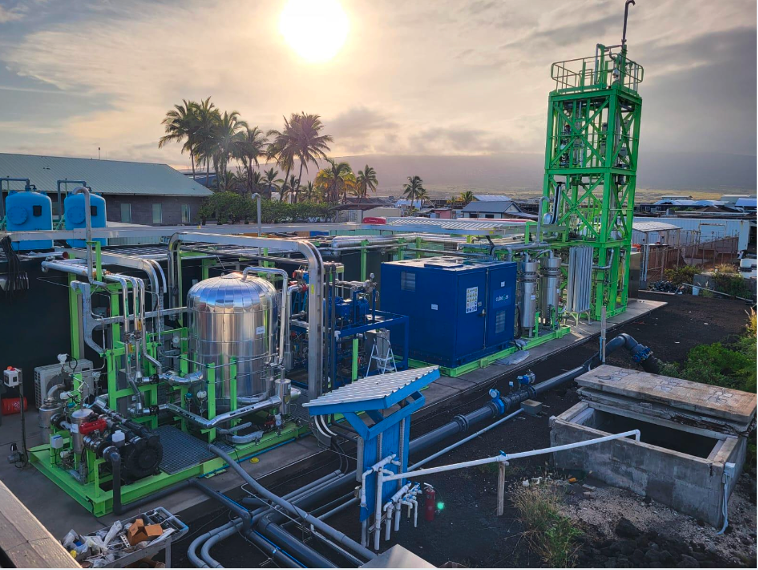
MachOne develops and manufactures the high-speed motors, centrifugal compressors and turboexpanders at the core of its Cryochiller. The closed nitrogen cycle can deliver the low temperatures required for biomethane liquefaction without direct contact between the refrigerant and the product gas.
Modular and Transportable
Containerised and skid-mounted sections are assembled, wired and tested before shipment. This limits the connections required on site and supports both new plants and retrofit projects where available space or construction time is constrained.
Scalable for Distributed Production
The modular concept allows liquefaction capacity to be matched to the biogas plant and expanded by adding units. This is particularly relevant for sites that are distant from a suitable gas grid or want an additional route to market.
Flexible Product Specifications
LBG temperature and pressure, liquid CO₂ grade, storage capacity and loading arrangement can be configured around the intended customer and logistics model. The process is not treated as a one-size-fits-all package.
Automated Operation and Remote Support
The systems can include PLC-based automation, remote monitoring, alarm management, operating-data storage and integration with the customer's control system. Service, spare-parts and maintenance responsibilities are agreed for each project.
Biogenic CO₂ Purification and Liquefaction
The CO₂-rich stream from a biogas upgrading plant may still contain moisture, methane, oxygen, nitrogen, H₂S, VOCs and other trace components. The treatment train is therefore configured around a complete gas analysis and the quality specification for the intended liquid CO₂ market.
How the CO₂ Process Works
1. Feed-Gas Cleaning
Where required, dedicated activated-carbon beds or other treatment stages remove H₂S, VOCs and relevant trace contaminants. The exact pretreatment depends on the upgrading technology and the incoming CO₂ composition.
2. Compression and Drying
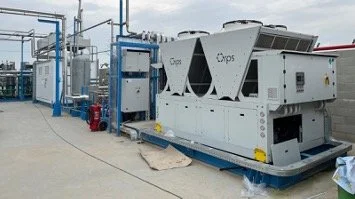
The cleaned gas is compressed and dried with molecular sieves. Removing water before the cold section prevents ice formation and protects stable operation.
3. Liquefaction and Separation
The dry CO₂-rich gas is cooled and liquefied. A separator can produce an industrial-grade liquid stream, while a cryogenic stripping configuration provides deeper removal of non-condensable components for higher-purity applications.
4. Quality Control
Product quality is verified against the agreed specification. An integrated analysis system can monitor CO₂ concentration and relevant trace contaminants, support batch documentation and provide the traceability required by the selected market.
5. Storage and Offloading
The liquid CO₂ is held in insulated storage and transferred by pump to a road tanker or the site's downstream process. Tank capacity and loading arrangement are sized around production rate and collection frequency.
Industrial or Food-Grade CO₂?
CO₂ concentration alone does not determine whether a product is food grade. A high-purity system can be designed to produce liquid CO₂ above 99.99%, but acceptance for food or beverage use also depends on limits for trace contaminants, continuous or batch analysis, sampling, documentation, traceability and the standards required by the buyer and local market.
For this reason, GGS recommends defining the intended CO₂ customer and quality specification at the beginning of the project. The treatment process, analyser package, storage system and operating procedures can then be designed around an agreed and verifiable requirement.
Applications
LBG / Bio-LNG
Heavy-duty road transport
Marine fuel and bunkering
Off-grid industrial energy supply
Virtual-pipeline distribution
Flexible storage and transport of renewable gas
Liquid Biogenic CO₂
Industrial process use
Greenhouse enrichment
Refrigeration and cooling applications
Food and beverage applications when the complete product specification and quality requirements are met
CCS - permanent underground storage
Carbon utilisation and Power-to-X (PtX), including e-methanation, e-SAF and other renewable synthetic-fuel pathways
Integrated with the Biogas Plant
Liquefaction performance depends on the upstream process and the downstream logistics. GGS can help coordinate the interfaces between the MachOne solution and other specialist systems, including:
Raw-biogas pretreatment and H₂S removal
Biogas upgrading and biomethane polishing
Biomethane and CO₂ compression
LBG and liquid CO₂ storage
Tanker loading and offloading systems
Gas analysis and product-quality control
Plant controls, remote access and data exchange
Commissioning, training, service and maintenance
GGS acts as the Nordic commercial and technical interface. MachOne and the relevant specialist suppliers retain responsibility for their technologies and the delivery scope agreed in the final proposal.
Planning an LBG or CO₂ Project?
Send us the available gas data and your intended product routes. GGS and MachOne can use this information to establish a preliminary process concept, identify critical interfaces and define what must be verified before equipment sizing and performance guarantees.
Useful Project Data
Existing or planned biogas-upgrading technology
Minimum, nominal and maximum biomethane flow
Biomethane composition, pressure, temperature and moisture
Minimum, nominal and maximum CO₂-rich off-gas flow
CO₂-stream composition, including CH₄, O₂, N₂, H₂S, water, VOCs and other known contaminants
Target LBG production, temperature, pressure and end use
Target liquid CO₂ production, grade and intended customer or application
Annual operating hours and expected load variation
Available electrical power, water, cooling and compressed air
Required storage capacity and tanker collection frequency
Site layout, ambient design conditions and ATEX classification
Required redundancy, availability, remote support and service scope