Efficient Membrane Upgrading for High-Quality Biomethane
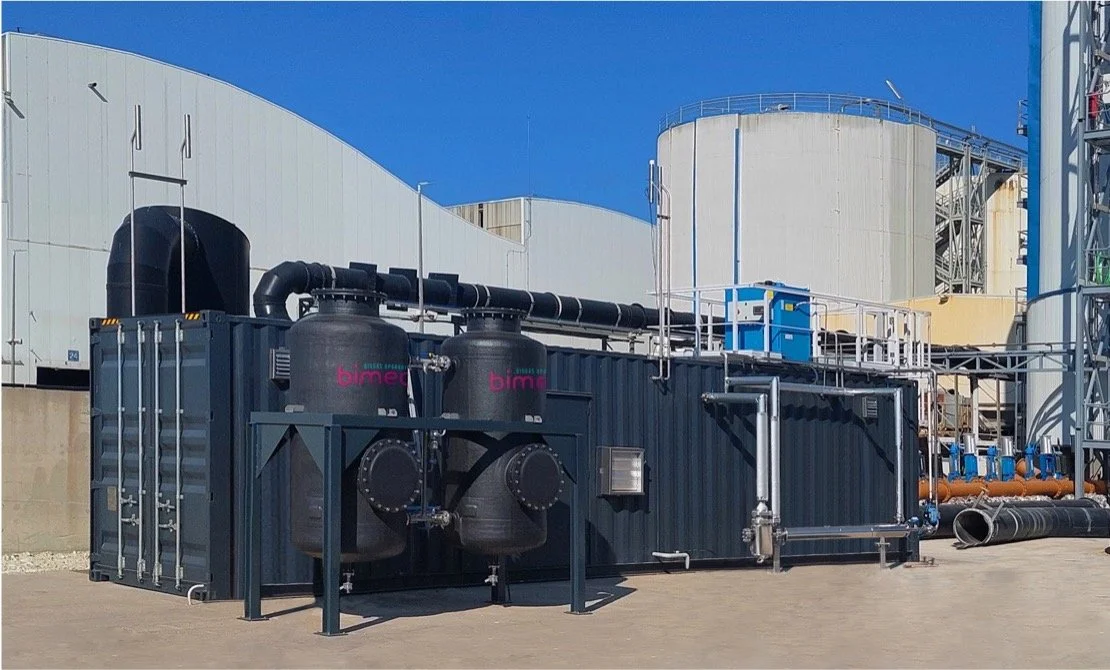
Upgrade biogas into biomethane for grid injection, compression, liquefaction or industrial use. BIMEO's valorGas® system combines SEPURAN® Green hollow-fibre membranes with Evonik's patented three-stage process to achieve high methane recovery with low energy demand.
Green Gas Solutions represents BIMEO in the Nordic market. We help customers evaluate feed-gas data, capacity and product-quality requirements, select the appropriate plant configuration and coordinate the commercial and technical process through delivery, commissioning and service.

From Raw Biogas to Usable Renewable Gas
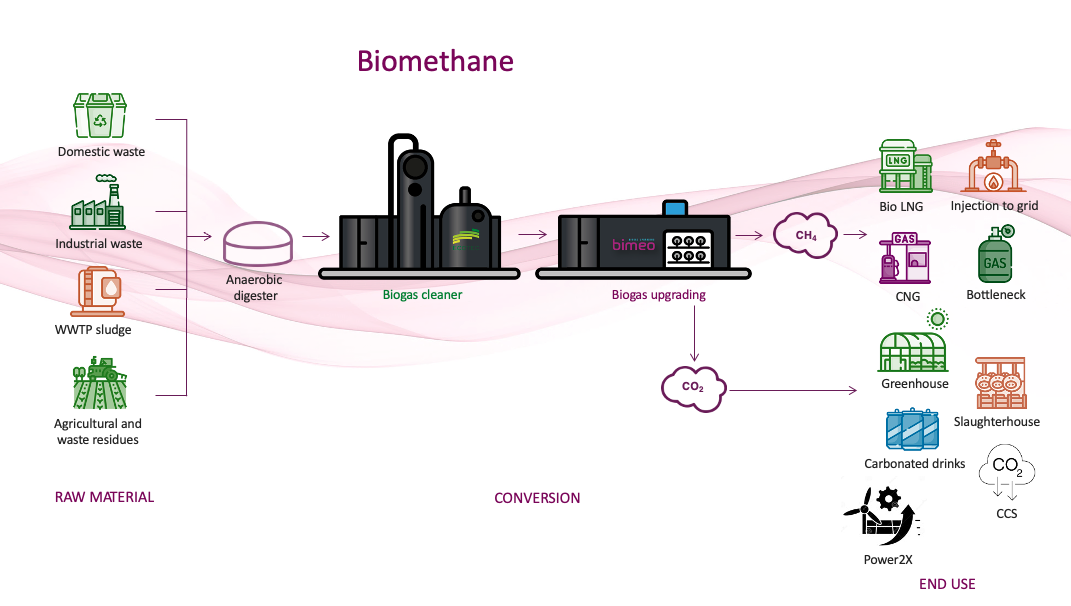
Raw biogas consists primarily of methane and CO₂, together with water vapour and smaller quantities of H₂S and other trace components. Biogas upgrading separates the CO₂ and prepares the gas to meet the quality requirements of its intended use.
The resulting biomethane can be injected into a gas network, compressed into Bio-CNG, liquefied into LBG or Bio-LNG, or used as a renewable industrial feedstock. The separated biogenic CO₂ creates a potential second value stream when its composition and quality are suitable for further purification and liquefaction.
How the valorGas® Process Works
1. Feed-Gas Assessment and Pretreatment
The feed gas is analysed and the pretreatment stage is configured around its specific composition. Depending on the project, this may include H₂S removal, drying and the reduction of other contaminants before the gas reaches the membranes.
2. Compression and Conditioning
The pretreated biogas is compressed and conditioned to the pressure, temperature and humidity required for efficient membrane separation. BIMEO specifies an operating pressure range of 12–20 bar for the valorGas® process; the final design conditions are determined for each project.
3. Membrane Separation
Inside the SEPURAN® Green hollow-fibre membranes, CO₂ permeates through the membrane faster than methane. The methane is retained and concentrated as biomethane.
4. Three-Stage Recovery
BIMEO integrates Evonik's patented three-stage membrane process. Intermediate gas streams are routed through additional membrane stages, and lower-quality gas is recycled to the process inlet. This increases methane recovery and concentrates both the biomethane and CO₂-rich output streams.
5. Automated Operation
The valorGas® system includes an integrated control system designed to provide a high level of automation and stable operation. The exact monitoring, service and remote-support scope is defined for each project.
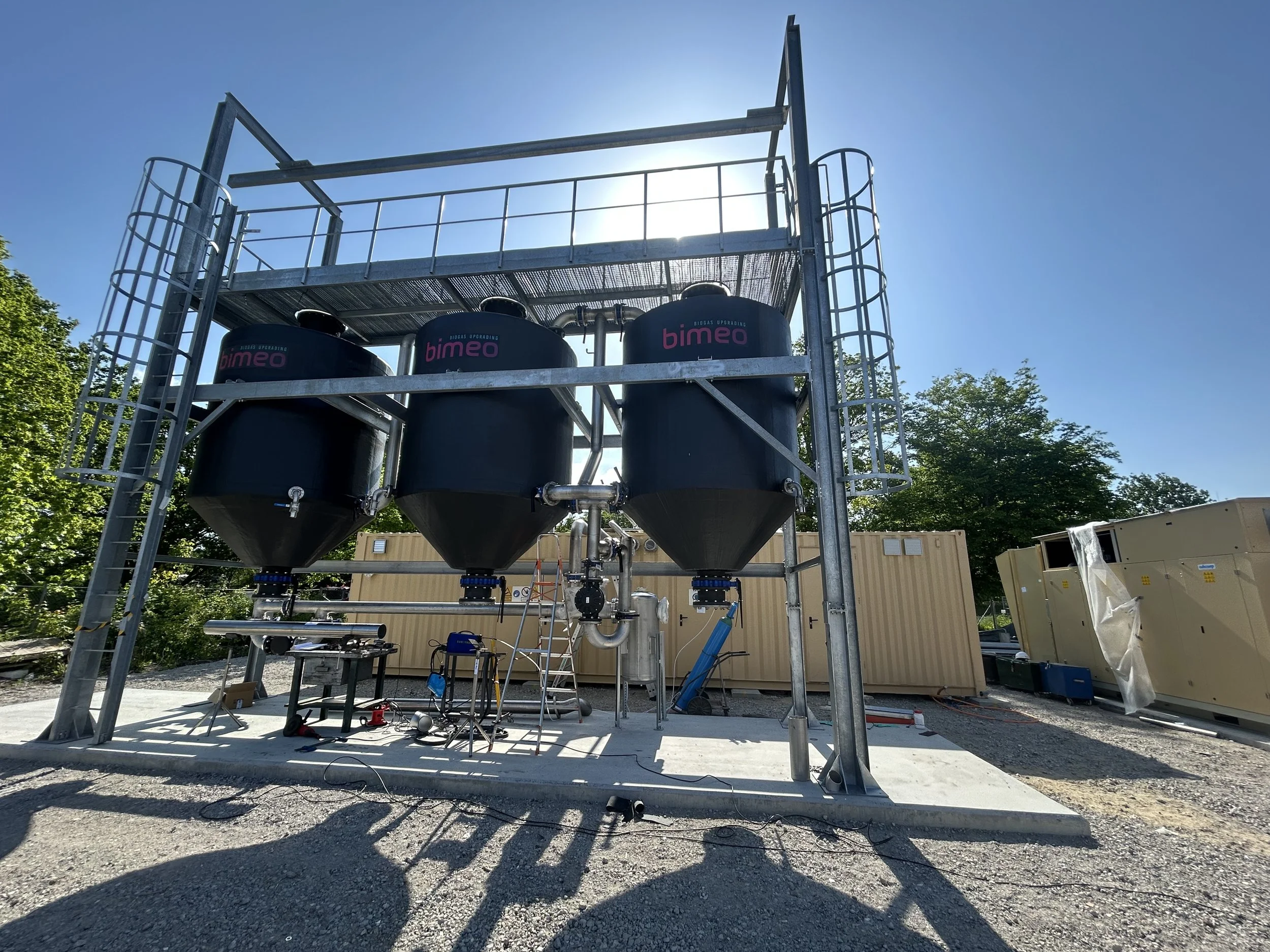
Why Membrane Upgrading?
High Methane Recovery
The three-stage process is designed to minimise methane losses and maximise the amount of biomethane recovered from the raw gas.
Low Energy Demand
SEPURAN® Green technology is designed for efficient separation with a single main compression step. Evonik states an electrical demand of approximately 0.2 kWh per Nm³ of raw biogas for its membrane technology; total plant consumption depends on the feed gas, pretreatment, pressure and required outlet quality.
No Process Water or Chemicals in the Membrane Stage
The membrane separation itself does not require process water or additional chemicals. Requirements for pretreatment and other plant systems depend on the feed-gas composition.
Modular and Scalable
The number and arrangement of membrane modules can be adapted to the required flow and product specification. Additional trains can be used for larger capacities or future expansion.
Two Potential Product Streams
The process produces biomethane and a concentrated biogenic CO₂ stream. Further purification, liquefaction and quality verification may be required before the CO₂ can be sold or used in a specific application.
Designed Around the Project
Each solution is configured around the actual gas analysis, flow profile, operating conditions, required biomethane quality and intended downstream use.
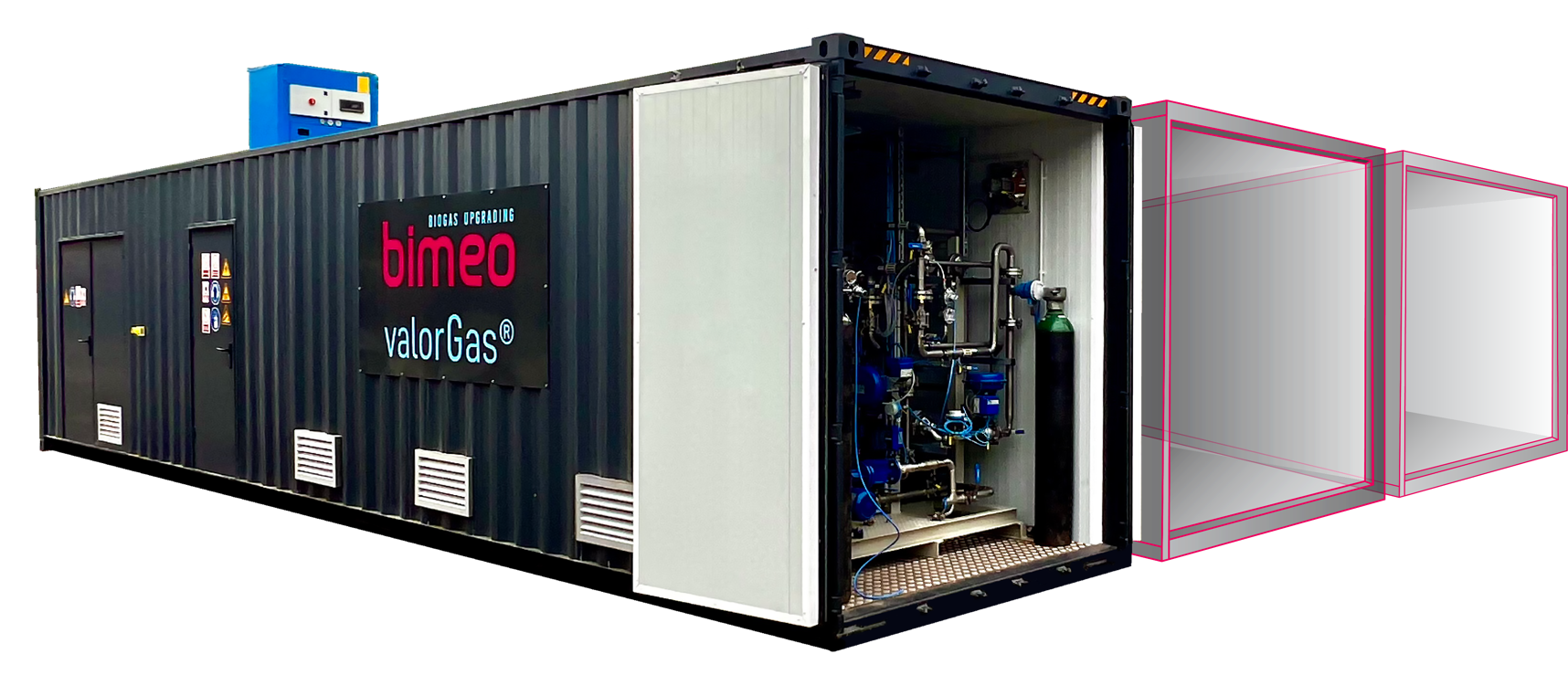
Part of a Complete Gas-Processing Train
Biogas upgrading is rarely a stand-alone process. GGS can help define and coordinate the interfaces between the valorGas® system and other specialist technologies, including:
H₂S removal and gas pretreatment
Drying and contaminant removal
Biomethane compression and grid injection
Bio-CNG or Bio-LNG production
CO₂ purification and liquefaction
Commissioning, service and maintenance
GGS remains the local Nordic interface while each specialist supplier retains responsibility for its technology and agreed delivery scope.
Planning a Biogas Upgrading Project?
Send us your gas analysis and main design conditions. GGS and BIMEO can use this information to assess the appropriate process configuration and prepare a preliminary technical basis for discussion.
Useful Project Data
Raw-biogas composition, including CH₄, CO₂, O₂, N₂ and H₂S
Relevant trace components, including NH₃, VOCs and siloxanes where available
Minimum, nominal and maximum gas flow
Inlet pressure, temperature and humidity
Annual operating hours and expected load variation
Required biomethane specification and intended use
Plans for the separated CO₂ stream