
Desulphurization and Environmental Gas Treatment
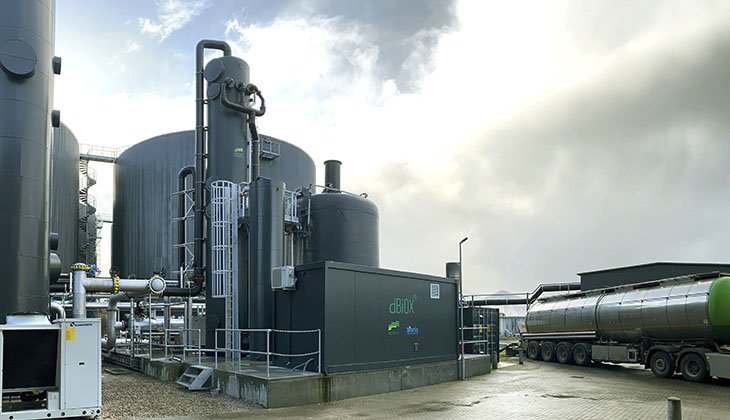
Protect the biogas process, control industrial air emissions and remove ammonia from liquid streams with ECOTEC technologies for biological and chemical treatment.
H₂S removal remains the core of the ECOTEC partnership. The wider portfolio also includes air and odour treatment, gas absorption and neutralisation, industrial ventilation, and NH₃ stripping with downstream recovery as ammonium sulphate.
Green Gas Solutions represents ECOTEC in the Nordic market. We help customers define the process conditions, identify the appropriate treatment route and coordinate the commercial and technical process through delivery, commissioning and service.
About ECOTEC
ECOTEC was founded in 1990 by environmental engineers with deep experience in gas and water treatment. As part of the TEFSA Group — a leading global filtration company — ECOTEC has continuously developed its own proprietary technology rather than relying on licensed solutions. Their biological treatment systems were developed through close collaboration with environmental sector specialists and decades of field experience across biogas, wastewater, landfill, and industrial applications. Today, ECOTEC operates hundreds of installations worldwide with a strong and growing Nordic presence.Three Areas of Treatment Expertise
Biogas Desulphurisation
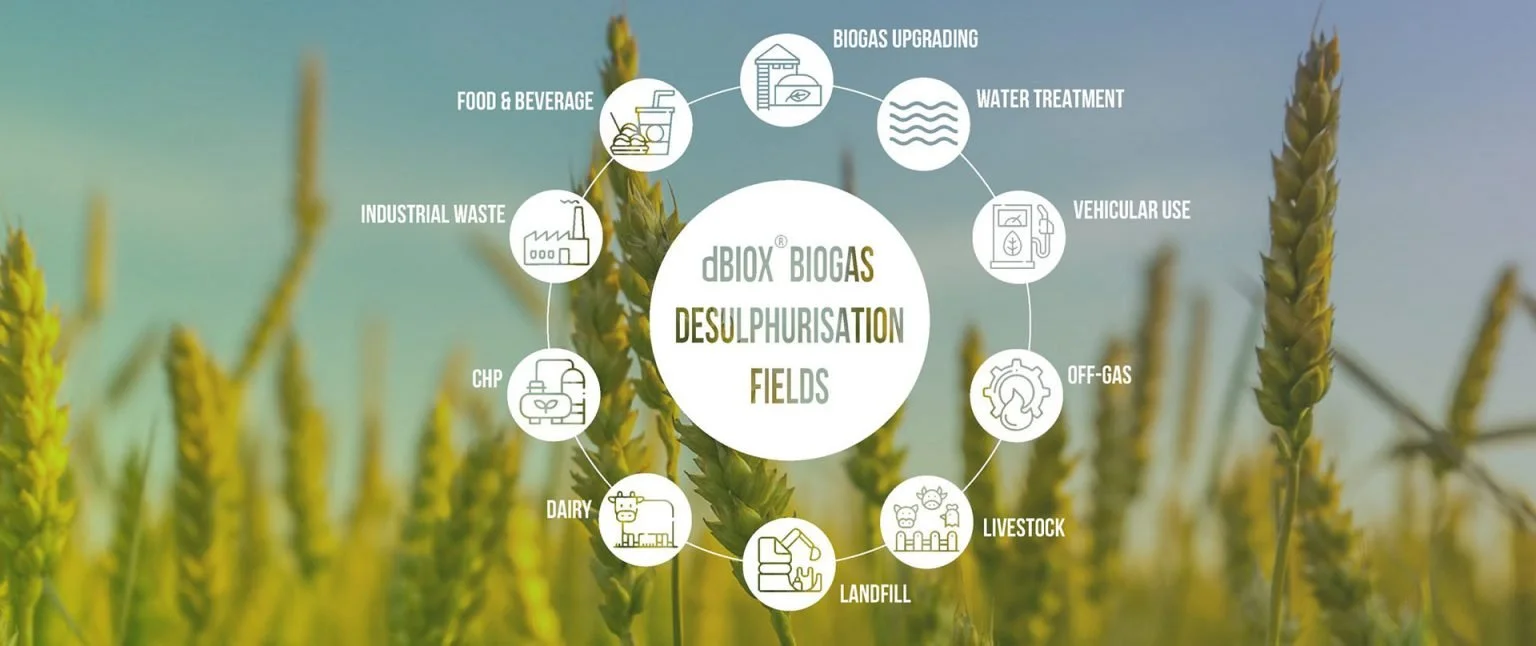
Remove H₂S from biogas or CO₂-rich process gas before upgrading, compression, CHP use, liquefaction or grid injection. ECOTEC offers biological dBiox® systems and regenerative chemical desulphurisation for different contaminant loads and outlet requirements.
Air and Odour Treatment
Capture and treat contaminated air from biogas plants, wastewater facilities, waste and composting sites, food production and industrial processes. Available technologies include chemical scrubbers, biofilters, biotrickling systems and industrial ventilation.
NH₃ Stripping and Recovery
Remove dissolved ammonia from slurry, digestate-related streams, leachate and industrial wastewater. NH₃ is stripped from the liquid and subsequently captured in an acidic scrubbing stage, producing ammonium sulphate rather than releasing ammonia to the atmosphere.
Desulphurization for Biogas and Process Gas
How it works
Hydrogen sulphide can cause corrosion, create safety and odour concerns, and damage upgrading membranes, compressors, CHP engines, catalysts and liquefaction equipment. The right desulphurisation system must therefore be selected around the actual gas composition, flow, pressure and required outlet quality.
ECOTEC offers more than one treatment route. This allows the process to be matched to the project rather than forcing every application into the same technology.
dBiox® Bioscrubber — Biological, Two-Stage
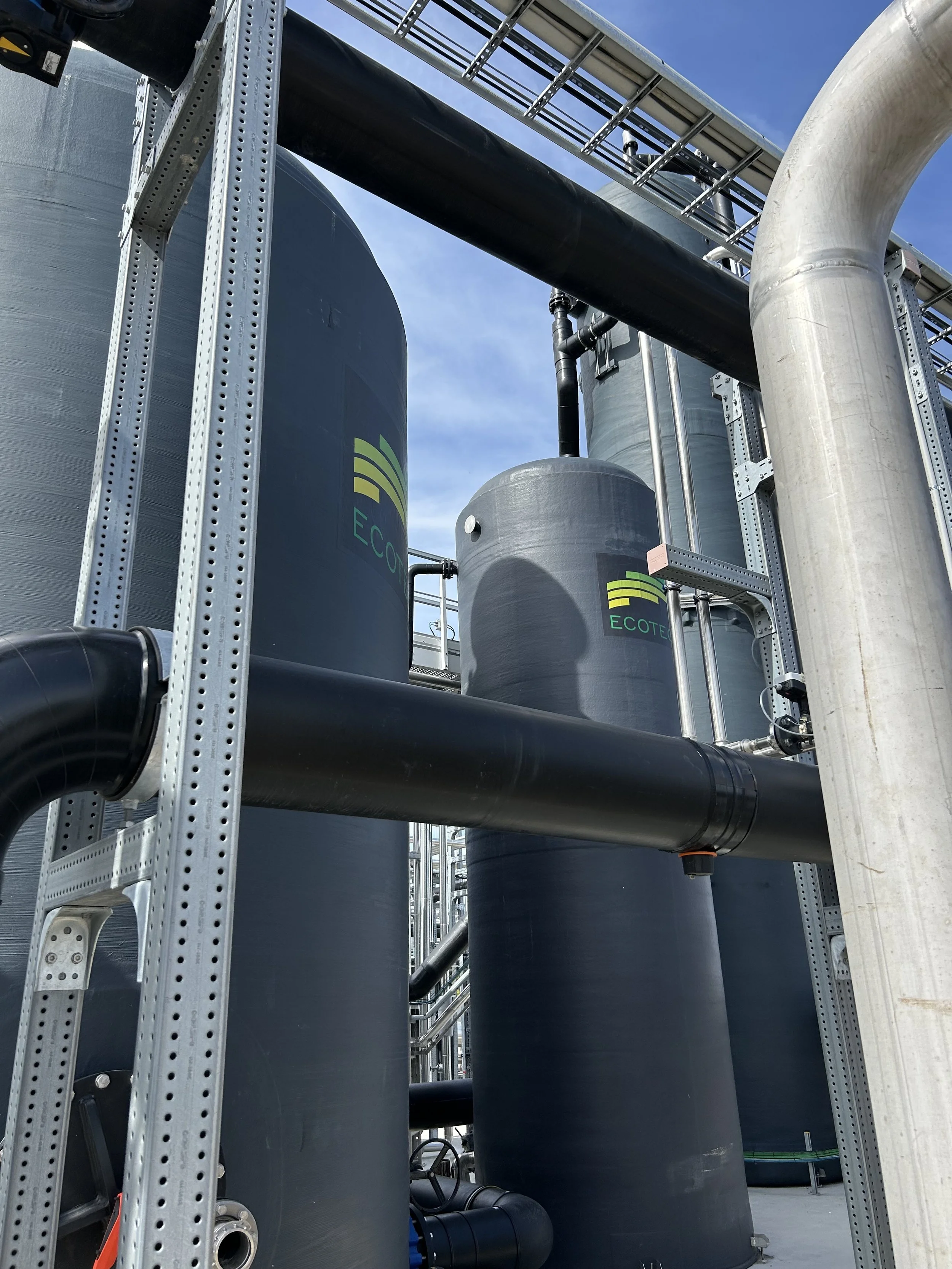
The Bioscrubber is a two-stage system: a scrubber column handles gas-liquid contact, and a separate bioreactor handles biological regeneration of the liquid.
Biogas enters the scrubber column and contacts an alkaline recirculating liquid. H₂S dissolves immediately and reacts with hydroxide ions — H₂S + OH⁻ → HS⁻ + H₂O — removing it from the gas stream with transfer efficiencies above 99%. Because the Empty Bed Residence Time (EBRT) inside the scrubber is minimal, the column itself can be compact, reducing investment costs.
The H₂S-loaded liquid is then passed to the bioreactor, where anaerobic microorganisms perform biological oxidation at alkaline pH, converting the absorbed sulphide to sulphate. The regenerated liquid is recycled back to the scrubber. A small stream of sulphate-rich liquid effluent is produced — this can be returned directly to farmers as a soil amendment, closing the nutrient loop on site.
The system uses minimal NaOH to maintain pH, and small quantities of nutrients for the microorganisms.
Key advantages:
Most suitable apllication for biogas upgrading: Does not add O₂ to the biogas stream
Clean Technology: Biological desulphurisation
Treats very high H₂S loads & high flow rates up to 40,000 ppmv at flows up to 20,000 m³/h
Minimal reagent and water consumption
Sulphate-rich effluent reusable as agricultural fertiliser — no waste disposal cost
Low operational costs > short return on investment costs
No biogas dilution
Advanced automated control: air batching, temperature, redox, pH, and nutrient monitoring
All operating parameters continuously logged for compliance and monitoring
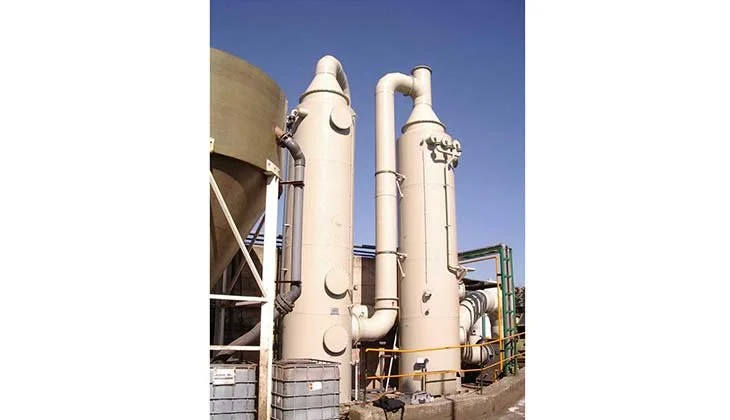
dBiox® Biotrickling Filter — Biological, Single-Stage
The Biotrickling Filter combines gas contact and biological treatment in a single compact unit. A packed inorganic bed provides the habitat for microorganisms; a nutrient liquid trickles continuously through the bed while biogas flows upward through the packing.
The microorganisms in the bed oxidise H₂S directly as it contacts the wetted packing surface. Because the process is entirely biological, the system requires no chemical reagents under normal operation — or only minimal quantities — eliminating toxic effluent and reducing operating costs substantially.
Key advantages:
No or minimal chemical reagent use
No toxic effluent requiring further treatment
Highly compact — single-unit design
Low operating costs
Well-suited to high H₂S loads and limited site space
Scalable to large flows
Key specifications:
Treats H₂S concentrations up to 5,000 ppmv
Gas flows up to 3,000 m³/h
Removal efficiency >98%
Does not add O₂ to the biogas stream
Minimal chemical and water consumption
Low CAPEX and OPEX — short return on investment
• • Remote control, technical assistance, and after-sales service
Why ECOTEC?
One Specialist Across Gas, Air and Liquid Interfaces
Biogas desulphurisation, odour control and ammonia removal often meet at the same plant. ECOTEC can assess these interfaces as part of one environmental treatment concept while keeping the individual process responsibilities clear.
Biological and Chemical Treatment Routes
The portfolio includes dBiox® biological treatment, regenerative chemical desulphurisation, chemical scrubbers, biofilters, biotrickling, stripping and ventilation. This gives the project more than one technical route to evaluate.
Designed Around the Actual Stream
Gas composition, liquid chemistry, contaminant variability, flow, temperature, humidity, pressure and required outlet values are reviewed before the treatment system is selected and sized.
Nordic Project Support
Green Gas Solutions acts as ECOTEC's local commercial and technical interface across the Nordic market. GGS supports early process clarification, proposal development, project coordination and the agreed commissioning and service scope.
Established Environmental-Technology Experience
ECOTEC was founded in 1990 and is part of the TEFSA Group. Its portfolio covers gas and water treatment, with installations across more than 50 countries.
Planning a Gas, Air or NH₃ Treatment Project?
Send us the process data you already have. GGS and ECOTEC can use it to identify the appropriate treatment route, establish a preliminary design basis and clarify what must be verified before sizing and performance guarantees.
For H₂S Removal
Gas source and intended downstream use
Minimum, nominal and maximum gas flow
H₂S concentration at minimum, nominal and maximum conditions
CH₄, CO₂, O₂, N₂ and relevant trace components
Pressure, temperature, humidity and operating hours
Required outlet H₂S and oxygen specification
Available footprint, utilities and redundancy requirements
For Air and Odour Treatment
Emission source and enclosure or extraction arrangement
Minimum, nominal and peak air flow
Contaminants, concentrations and odour data where available
Air temperature, humidity and particulate content
Required emission or odour limit
Existing ventilation, ducting or scrubber equipment
For NH₃ Stripping
Liquid source and minimum, nominal and maximum flow
NH₃-N or total ammoniacal-nitrogen concentration
pH, alkalinity, temperature and suspended solids
Relevant salts, hardness and scaling indicators
Required outlet concentration
Potential route for the ammonium-sulphate stream
Available heat, power, chemicals, water and compressed air
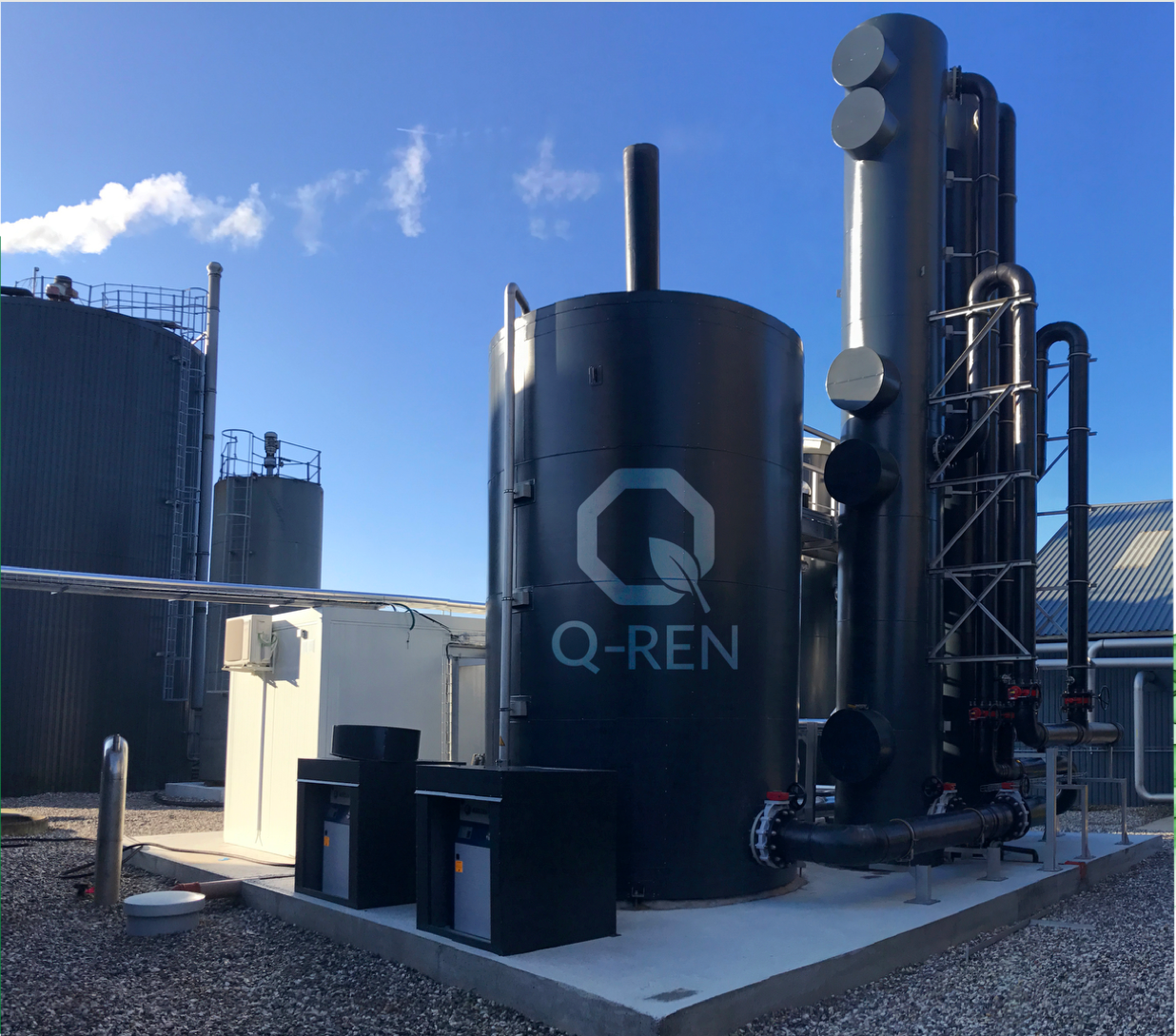
Q-REN — Regenerative Chemical Desulphurisation
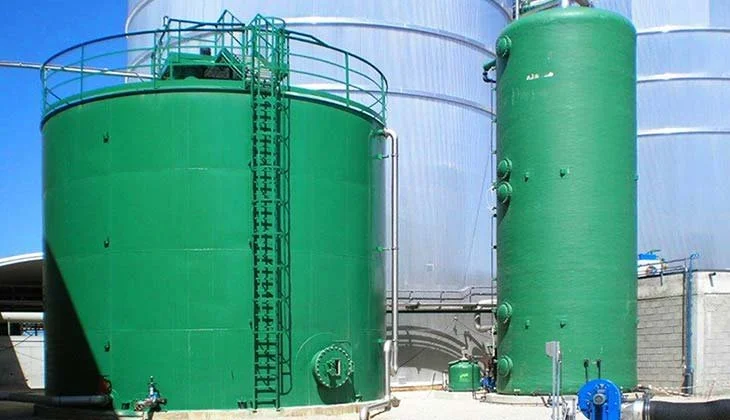
Q-REN is ECOTEC's chemical regenerative H₂S removal system, developed specifically for applications where biological systems face limitations — particularly plants requiring exceptionally stable outlet gas quality for sensitive downstream equipment such as membrane upgrading systems.
Unlike conventional chemical scrubbers that consume reagent continuously, Q-REN's regenerative process continuously restores the chemical medium, minimising chemical consumption and operating costs. Critically, Q-REN does not add O₂ to the biogas stream — making it the preferred choice where downstream membrane upgrading or other oxygen-sensitive processes are in use.
Best for: High H₂S loads, high flow rates, variable gas compositions, or where zero oxygen addition to the gas stream is required.
Air and Odour Treatment
Odour and air-emission problems vary widely between plants. A wastewater facility, receiving hall, digestate area, food-production process and chemical plant may have very different air flows, contaminant combinations and regulatory requirements.
ECOTEC therefore combines air capture and ventilation engineering with biological or chemical treatment. The solution is selected from the contaminant profile, concentration, air volume, temperature, humidity, variability and required emission limit.
Chemical Scrubbers
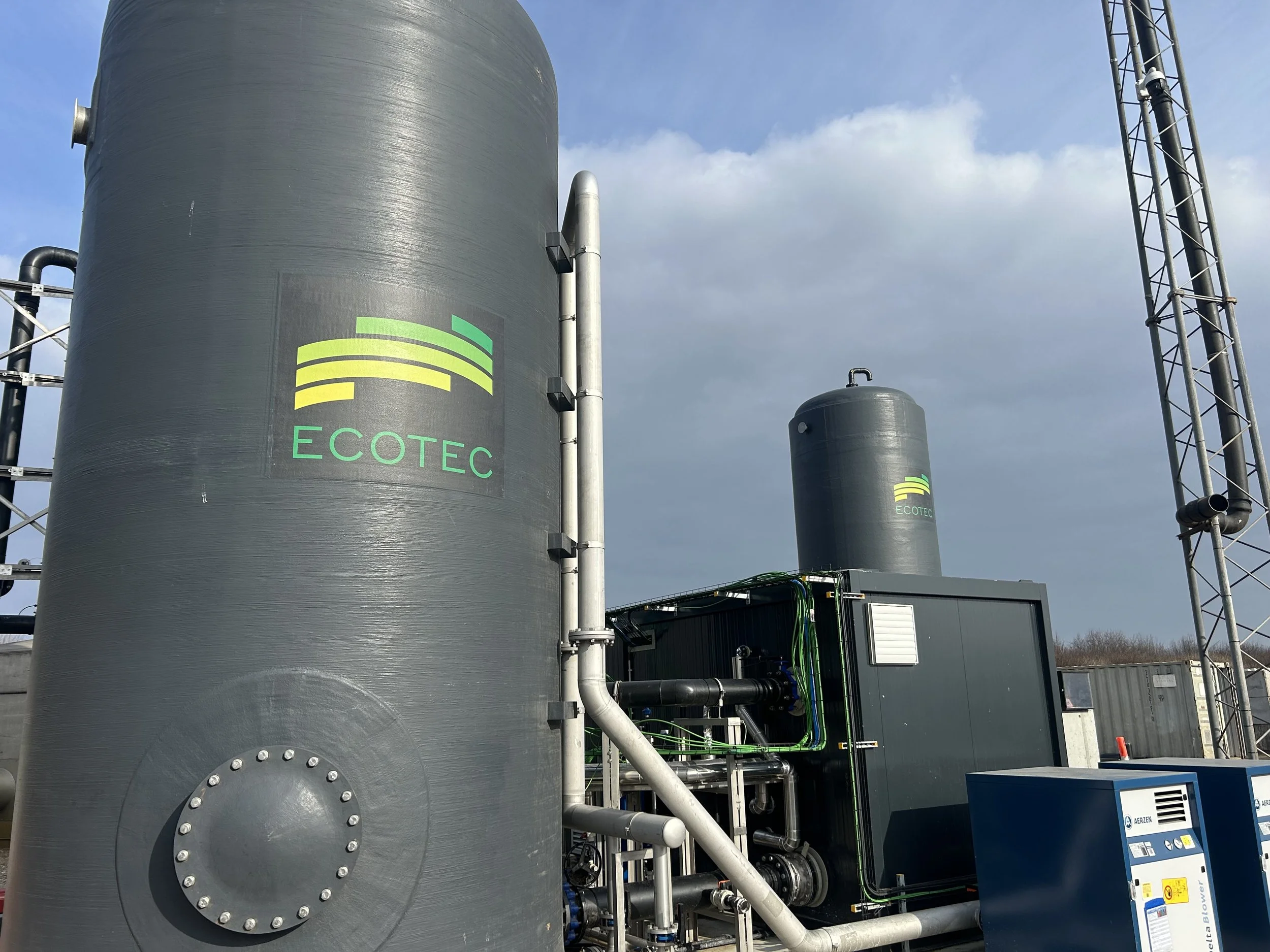
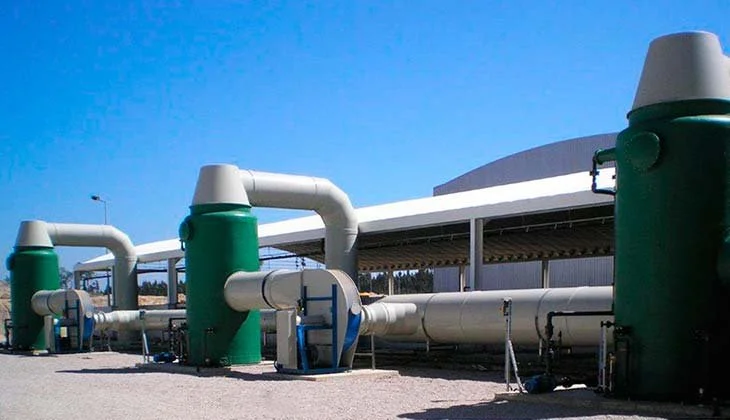
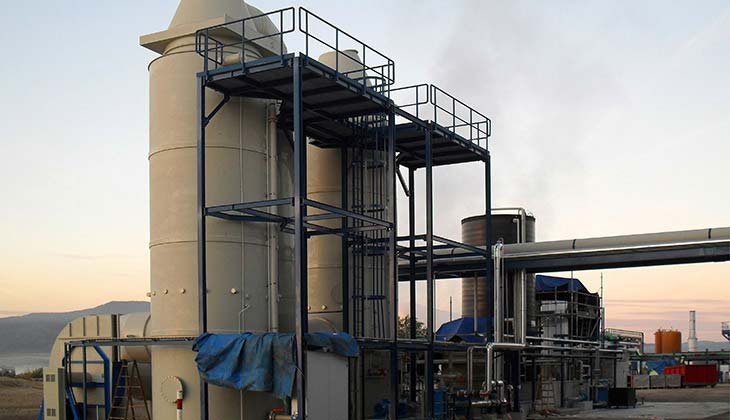
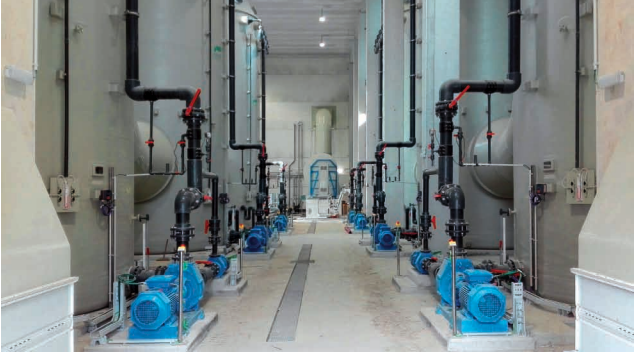
Chemical scrubbers remove gaseous contaminants through physical absorption and chemical reaction in a circulating liquid. ECOTEC configures vertical or horizontal systems for pollutants including sulphur compounds, ammonia and amines, acidic gases and other industrial emissions.
The packing, number of treatment stages, chemicals, liquid circulation and control system are designed around the specific air stream and required outlet values.
Biotrickling for Odour Control
Biotrickling combines a packed biological reactor with continuous liquid circulation. It can treat H₂S and other biodegradable odour compounds with little or no chemical-reagent consumption, depending on the application.
Existing chemical scrubber towers may in some cases be converted to biological operation, allowing suitable infrastructure to be reused. Retrofit feasibility must be assessed from the tower, packing, materials, hydraulics and required performance.
Industrial Ventilation and Air Capture
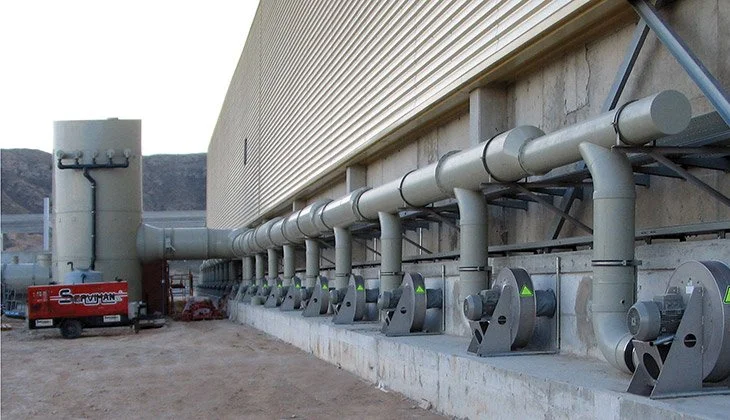
Effective treatment begins with collecting the contaminated air. ECOTEC designs local extraction, suction hoods, ducting, anticorrosive fans and general ventilation systems around the emission source and working environment.
ECOTEC publishes ventilation references up to approximately 200,000 m³/h. The required capture rate and final configuration are determined for the specific building, process and contaminant source.
Typical Air-Treatment Applications
Biogas receiving and processing areas
Digestate storage and handling
Wastewater treatment plants and pumping stations
Composting and municipal-waste facilities
Food and beverage production
Rendering and other odour-intensive industries
Chemical and pharmaceutical processes
NH₃ Stripping and Recovery
ECOTEC's NH₃ stripping systems are designed to remove dissolved ammonia from a liquid stream. Typical applications include slurry, leachate and industrial wastewater. This is different from removing trace ammonia directly from biogas.
How the Process Works
1. Feed-Liquid Assessment
The incoming liquid is characterised for flow, ammonia concentration, pH, alkalinity, temperature, suspended solids and other components that influence stripping and scaling behaviour.
2. pH Adjustment
The pH is adjusted to shift dissolved ammonium towards gaseous ammonia. The exact chemical demand and operating point depend on the composition and temperature of the liquid.
3. Countercurrent Air Stripping
The conditioned liquid and air pass countercurrently through a packed stripping tower. Ammonia transfers from the liquid into the air stream.
4. Acid Scrubbing
The ammonia-containing air is directed to a second chemical washing stage under acidic conditions. The NH₃ is captured instead of being released to the atmosphere.
5. Ammonium-Sulphate Production
The capture stage produces an ammonium-sulphate solution. Its concentration, quality, potential reuse and regulatory status depend on the feed stream and the project-specific process design.
Why Consider NH₃ Stripping?
Reduce the ammonia load in slurry, leachate or industrial wastewater
Support downstream water-treatment performance
Control ammonia emissions and odour
Capture nitrogen in a more manageable ammonium-sulphate stream
Create potential for nutrient reuse where product quality and local requirements allow it
ECOTEC reports NH₃ stripping references that have operated for more than 25 years. Final removal efficiency, chemical consumption, energy use and product quality must be established from the confirmed liquid analysis and project conditions.
WHAT THE CLIENTS SAY
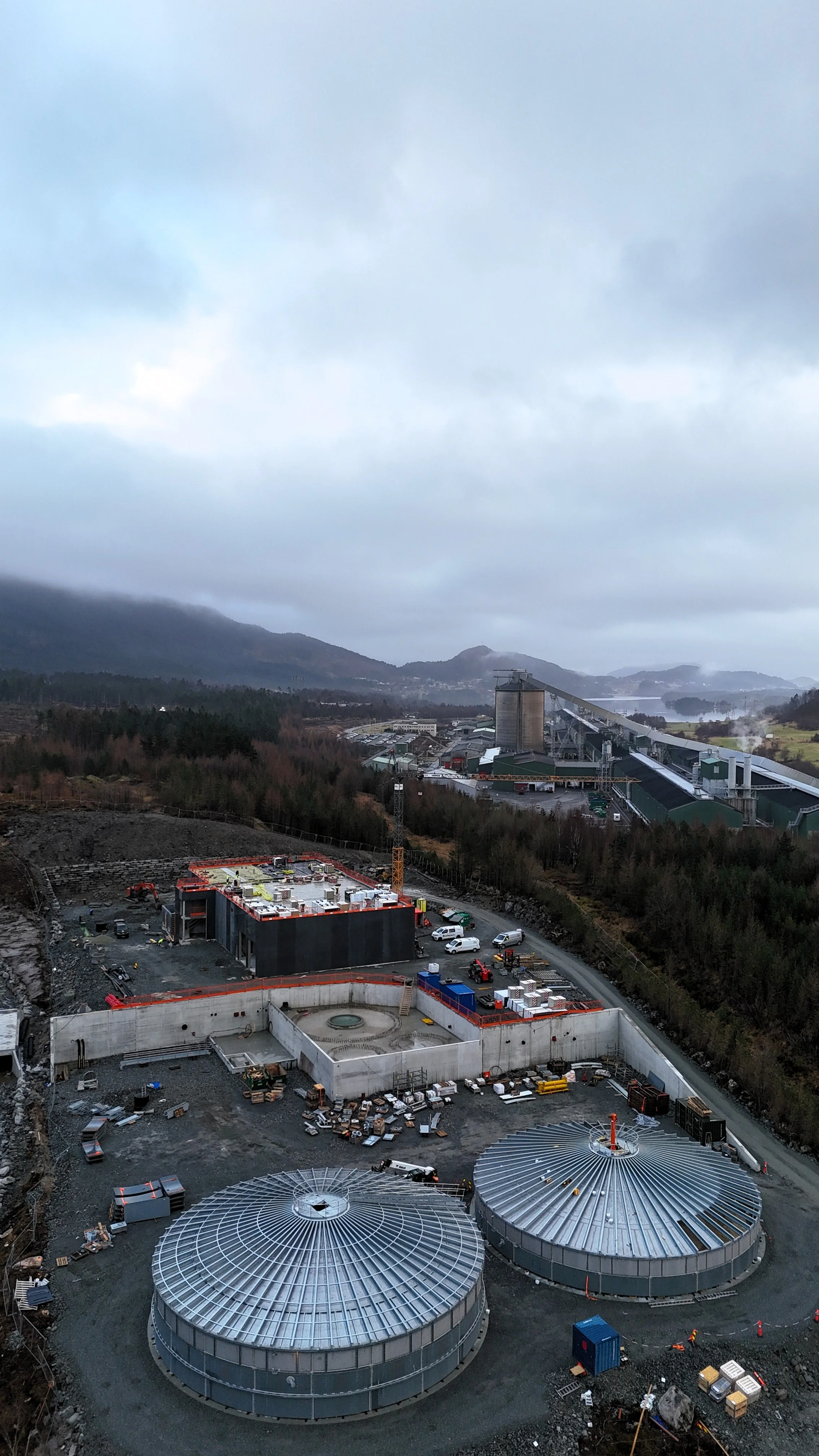
“Vireo conducted a thorough tender process involving several suppliers of scrubber technology. Following a comprehensive evaluation, ECOTEC achieved the highest overall score. We placed particular emphasis on quality, operational reliability, and low operating costs—areas in which ECOTEC came out as the winner. We now look forward to mobilization and the commissioning of the scrubber technology in our two upcoming projects,”
— Richard Kringlebotten, CPO at Vireo AS.